Music
Feb 17, 2026
6 mins Read
U.See: Making Music For Self-reflection
Shomade.A
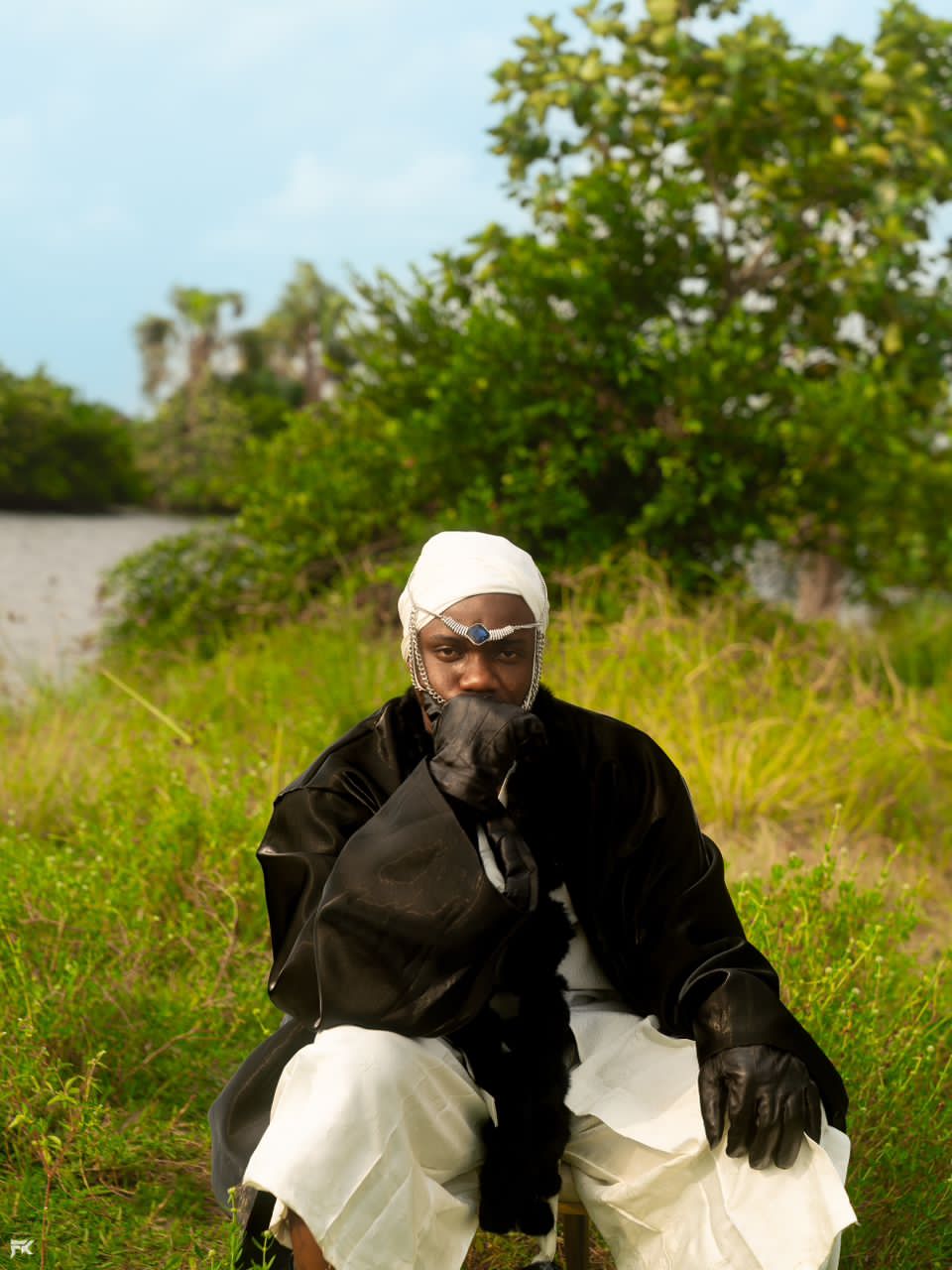
It's common for music to be informed by trends, streaming numbers, and surface-level hits. It's also not uncommon that these commercial-driven sources of inspiration come secondary. Uchechukwu Michael Ugboma, popularly known as U.See, firmly holds this opinion, that music should come from depth, the insides of the creator where he/she alone can reach and manage to stir up discomforting self-reflection in others.
Rapper, singer, songwriter, and sound engineer, U.See is interrogating systems. From colonial influence and inherited trauma to spirituality, identity, and African self-awareness, his music is resistance wrapped in melodies and rhythm.
Born and raised in Lagos, Nigeria, U.See began his professional journey in 2014, first gaining recognition as a freestyle rapper at Olabisi Onabanjo University, where he was known as U.C Tha Rap Omega. Over time, he evolved into what we now know as U.See, an artist committed to lyrical depth, emotional honesty, and the transformative power of sound.
As part of our weekly 69Entertainment Brand Profiling, where we spotlight creatives across Nigeria and the diaspora, we ask one recurring question in different ways: Who are you?
In this conversation, he reflects on neocolonialism, self-discovery, therapeutic songwriting, and the kind of discomfort he hopes listeners carry long after the beat fades.
Q. You seem to have strong opinions on systems, colonialism, power, inherited trauma. How does this influence your music?
A: Yes, absolutely, and that is because I realize that a lot of things that we noticed today in Africa are based on colonial influence. For example, our own African spirituality has been demonized because we had Europeans who came into our home and told us that our own form of spirituality was evil, forgetting that we didn’t have the bombs and the guns used to kill each other. But for some reason, we believed that we were not good enough for ourselves. This has led people to some crazy traumatizing events, like not chasing your dreams simply because they stereotyped said if you’re not a doctor or lawyer in Nigeria you’re nobody. The person who has passion for football could think less of himself, or the person who just has passion for poetry and wants to live a simple life is seen as low class. I strongly believe the colonial system did this to us, where people are more capital driven than passion driven.
So this influences my music because I have a goal. I have a mission to let my African people understand that they are the beginning and they are enough, from the texture of our hair to the melanin of our skin and the shape of our nose. I need them to know that our melanin is beautiful. Our hair is beautiful, and we must get back our self awareness.
Q: “Distressed” feels less like a song and more like a confession. What emotion did you sit with the longest while creating it?
To be honest, it was just me sitting back and looking at my life and how far I have come. With all the challenges and stress, I went through it all and came up stronger. Nothing stopped me. I worshiped and complimented that side of me. That was why I decided to make the song, to appeal to people who have been in my situation or to anyone who has been in any kind of situation that seems too much for him or her. It is a wake up call to let that person know they’re not alone and that I feel it too. I know the pain you go through and you will win. I call the song a therapeutic song made for healing and reflecting.
Q: Do you think neocolonialism today is louder or quieter than before and how does that silence show up in everyday African life?
In my humble opinion, I strongly believe it’s louder in our today society, but in a quiet way. I honestly don’t think colonialism left Africa because the influence still stayed so much that we’ve forgotten our own roots. An example is the African spirituality that has been demonized and how our kids today no longer see pride in bearing their native names. I say it’s louder today because of the industrialization it has led to, that is a group of elites has decided to industrialize it. An example I would give are those who make a stupendous amount of money as religious leaders, apparently reaping from a country that is deeply religious to a colonial masters' religion. It is quite alarming, and I believe Africans will become less religious when people like you and I can think of solutions to problems rather than waiting for the blood of Jesus to come and save us every single time.
Q: What's the hardest part of making music outside of Lagos?
Well, that would be knowing the fact that people around that vicinity might not be conversant with your sound, unlike Lagos that has more population with more personalities that could resonate with your sound. Also knowing that I grew up here, it’s easy for me to say I want to have a show in Lagos, unlike when you’re outside Lagos you’d need to know the dos and don’ts of that particular place you are in, which can be difficult sometimes.
Q: Who are you speaking to when you make music, the oppressor, the oppressed, or yourself?
Personally, I would say, myself and to anyone there who feels what I feel. I know they’re over 2 billion people on earth, therefore I can’t be the only one who feels the way I feel. So it’s only better if I put them in a sound for whoever feels the same to connect and know they’re not alone. I believe that is what music should give. Music should give hope and is meant to be therapeutic for the human soul.
Q: How does your background influence your current style?
Very much, I must say. From my upbringing to how I was raised totally influenced the kind of music I make. I grew up listening to Westlife, Michael Jackson, Backstreet Boys, Boys 2 Men, Craig Davids, Style Plus, 2 Face, P-Square, and then J. Cole was my mentor in lyricism when I decided I was gonna be a rapper until I decided to make both rapping and singing my whole music thing. So the goal is to bring the Style Plus, P-Square, 2 Face sound to a modern sound and make it one meal for us, haha. I know it sounds crazy, but it’s my agenda, just as our legendary Fela Kuti was able to infuse juju music and jazz to form Afrobeats. I’m sure in the coming years people will look up to a sound like that.
Q: Which creatives, producer, artist, backup singers, directors, do you look forward to working with in 2026?
I would say Dottie the Deity, Chike, Burna Boy, and J. Cole for sure. Hence, for producers, I’m really looking forward to working with P Prime and Sarz.
Q: When listeners walk away from your music, what discomfort do you hope they can’t shake off?
I hope they can’t shake the discomfort of self-reflection. My music is meant to feel good on the surface but linger in the mind. I want listeners to dance, then later realize the lyrics were asking them hard questions about love, identity, ambition, and the choices we make. If the rhythm fades but the message keeps knocking, that’s when I know the song has done its job.
Related Posts
Jul 06, 2026
3 mins Read
Music
Building Music Beyond the Studio: Roarvolution as...
Shomade.A
Apr 02, 2026
6 mins Read
Music
Trending
They Owned My Songs, My Body, My Silence: A 10-Yea...
Shomade.A
Apr 02, 2026
5 mins Read
Music
Trending
“I Had the Money. I Had the Plan. And Still Got Sc...
Shomade.A